
Salford Lads and Girls Club upgraded to Grade II* status
Salford Lads and Girls Club (SLGC) upgraded from Grade II to Grade II* (star)
Historic England identifies the building as the finest surviving purpose-built lads club in England
Building illustrates the important role youth clubs played in supporting young working-class people in the late 19th and early 20th centuries
One of the North West's most important youth club buildings has received national recognition following decisions by the Department for Culture, Media and Sport on the advice of Historic England.
Salford Lads and Girls Club has been upgraded from Grade II to Grade II* in recognition of its exceptional architectural and historic significance.
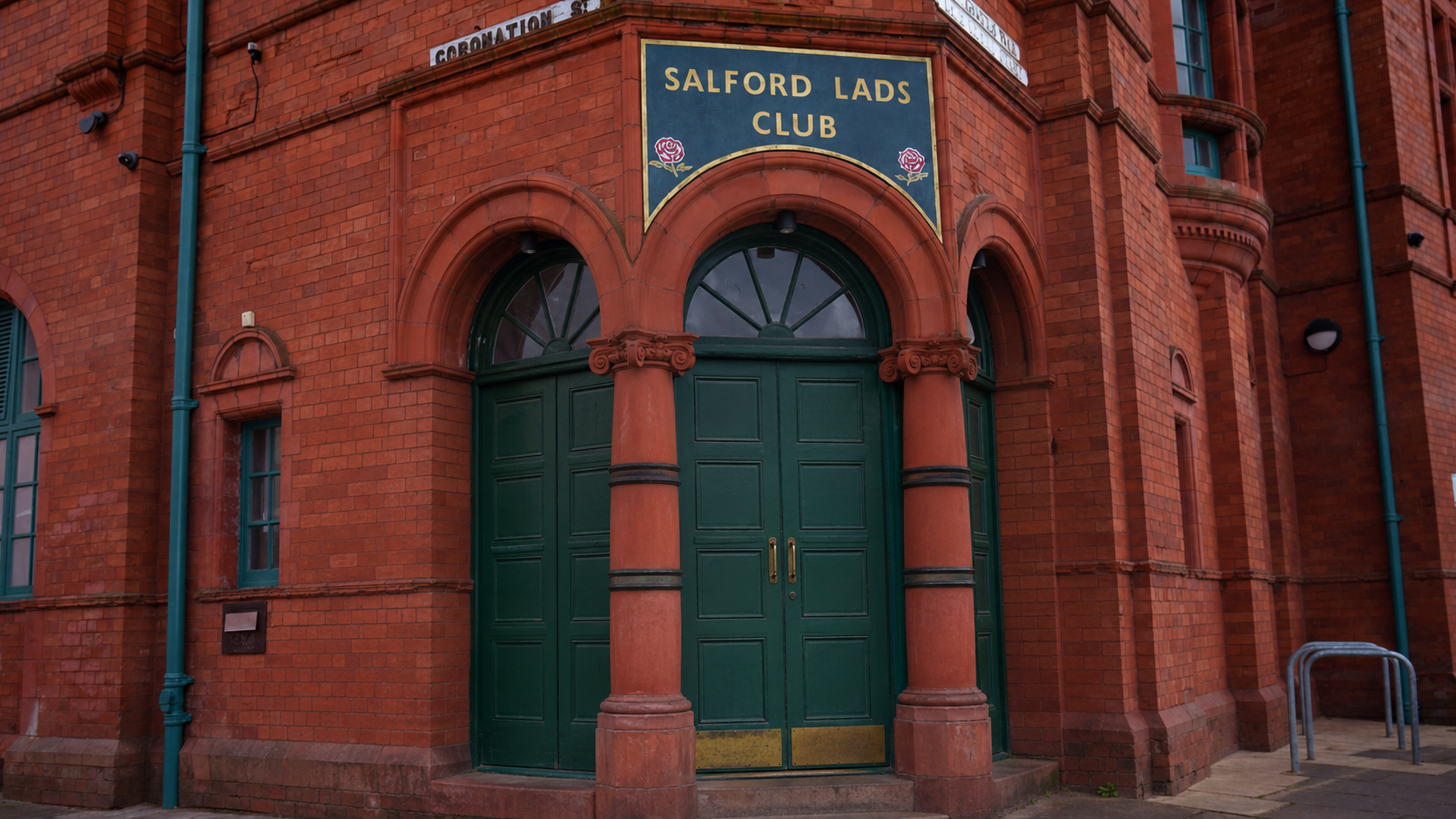
The decision recognises this rare surviving example of purpose-built lads' clubs, a building type once common in industrial towns and cities but now increasingly scarce.
Councillor Hannah Robinson-Smith, Lead Member for Culture, Heritage, Sports and Leisure at Salford City Council, said:
“I’m so pleased to see Salford Lads Club has now been designated as a Grade 2* listed building. The building holds such a special place in many local resident’s hearts across Salford, it has played a huge role in so many people’s lives and the whole city is so proud of what the club stands for.
"We are so pleased the Club has received this further national recognition, proving it’s not just us Salfordians who understand how important it is! It is quite unusual for this type of building to receive this status, and this really positive news further highlights the Lads Club’s uniqueness, and it means the building continues to be protected for future generations to come.”
Emma Squire and Claudia Kenyatta, Co-CEO Historic England, said:
"This remarkable building tells the story of a movement that transformed opportunities for generations of young people. Built to provide recreation, education and support, lads' clubs became integral to community life across industrial Britain.
"Salford Lads and Girls Club is the finest surviving example of its type in the country and fully merits its Grade II* status.
"The building demonstrates the power of heritage to connect us with stories of community, philanthropy, social reform and opportunity. We are delighted its importance has been recognised through these listing decisions."
Laura Slingsby, Chief Executive of Salford Lads and Girls Club, said:
"We are incredibly proud that Salford Lads and Girls Club has been recognised as a building of more than special interest. This is a tribute not only to the building itself, but to the generations of members, volunteers and staff who have kept it at the heart of the community for more than 120 years.
"The club continues to provide opportunities for young people today, and this recognition helps secure its future for generations to come."
Leslie Holmes, Salford Lads and Girls Club, Culture and Heritage Projects Manager, said:
“This is brilliant news! It’s what I have been working towards since I first came into the building in 2002. The creation of the Smiths room and the archive room has enabled us to showcase the unique cultural importance of the building, and to attract thousands of visitors every year; I am immensely proud of what we have achieved.”
David Britch, Architects Britch, said:
“It has been my privilege over the last 25 years or so, to have worked on The Salford Lads Cub. A building of invaluable cultural, social and architectural significance, both locally and far beyond. Hopefully my work has contributed to the resilience from climate change and the incremental improvements will allow the club to continue to flourish into the future.”
Historic England's research has found that Salford Lads and Girls Club along with Crossley House in Manchester are thought to be the only surviving purpose-built lads' club buildings in Greater Manchester.
Lads' clubs emerged during the late Victorian period to provide recreation, education and opportunities for working-class boys, helping to steer young people away from poverty, crime and social exclusion. By 1907 there were 23 lads' clubs across Manchester and Salford alone. Today, very few survive nationally.
Salford Lads and Girls Club, built in 1903 to designs by architect Henry Lord, is considered the finest surviving example of a purpose-built lads' club in England. It was funded by William Grimble Groves and James Grimble Groves of the Salford based Groves and Whitnall Brewery, who helped support the creation of the club as part of a wider movement to provide opportunities and recreation for young working people in rapidly industrialising towns and cities.
Historic England found it to be one of the largest and most architecturally ambitious examples ever built, retaining an exceptional degree of survival both externally and internally. The club remains in active use more than 120 years after opening and is believed to be the oldest lads' club building in the country still occupied by its original organisation.
Sporting, musical and community legacy
Salford Lads and Girls Club has played an important role in the lives of generations of young people and has strong associations with nationally significant sporting and musical figures, including Manchester United and England footballer Eddie Colman, champion boxers Jamie Moore and Marc Leach, and musicians Allan Clarke and Graham Nash.
The club is perhaps best known internationally through its association with The Smiths. This year marks the 40th anniversary of The Queen Is Dead, one of the most influential British albums of the 1980s, whose iconic sleeve photography was taken outside Salford Lads and Girls Club. The anniversary has renewed attention on the building, which continues to attract music fans from across the globe and has become one of Greater Manchester's most recognisable cultural landmarks.